The Odyssey Within
A educational program based on The Odyssey, and Luka Lesson’s Odysseus.
In-person Incursions | Online Resource
Having trouble teaching the classics?
That's because to teach the classics, students must engage with the classics. Creatively.
The Iliad and the Odyssey were never dead poems on dusty book pages — they were living, breathing oral traditions. Myths that gave each Ancient Greek citizen moral guidance and direction.
The Odyssey Within solves the things that make teaching the classics hard:
Students glazing over? Each module opens with a hip-hop and spoken-word performance from Luka Lesson's Odysseus. By the end of the lesson, students aren't reading Homer — they're arguing with him.
Don't know where to start with poetry? Proven scaffolded writing workshops facilitated by Luka Lesson himself get the pens moving. Students leave each unit with their own finished poem in hand.
The original Greek feels untouchable? The full Homer text is included — in the public-domain A. T. Murray translation — with the read-aloud passages highlighted in gold.
No prep time? Every module is a print-ready PDF. Full NSW Stage 5 & 6 outcome mapping, four-subject homework already split, assessment tasks and discussion questions already written.
Need cross-curricular? Every module is a unit in English, a lecture in Ancient History, a scene-study in Drama, a score-analysis in Music, and a wellness reflection in PDHPE — all in the same document.
Need both creative AND academic authority? Built by a professional poet (Luka Lesson), a Sydney Conservatorium composer (James Humberstone), an Athens classicist (Dr Antiopi Argyriou) and an ancient-instrument maker (Thodoris Koumartzis, Seikilo Museum) — so the program is academically serious AND creatively alive.
Curriculum Alignment:
The Odyssey Within is mapped to the NSW Curriculum.Years 9–12.
-
Every module of The Odyssey Within is built for the English classroom. At its core is the Odyssey itself — reproduced in full from the public-domain A. T. Murray translation (1919), with the passages Luka Lesson reads in the videos highlighted in gold so students can follow along, then read on into the surrounding context.
Beside Homer sits a complete contemporary response: Luka Lesson's hip-hop and spoken-word version of each scene, transcribed as a theatre script. Students get to compare two retellings of the same story — three thousand years apart — and learn what a writer chooses to keep, cut, compress and reframe.
Two structured writing workshops per module guide students into producing their own poems. Each opens with a five-minute stream-of-consciousness warm-up, then steps through 10–15 prompts that scaffold from a first line ("When I was born…") to a closing line and a new epithet. By the end of every module, every student has two finished poems.
Greek dialogue in the scripts comes with actor transliterations — students can read the original Greek aloud the way it would have been heard. Modern echoes are built into every Further Reading list: Atwood's Penelopiad, Tennyson's Ulysses, Cavafy's Ithaka, Joyce's Ulysses, Eliot's Prufrock, Madeline Miller's Circe, Kafka's Silence of the Sirens.
Full NSW Stage 5 and Stage 6 Advanced English outcome mapping is included in every module — every assessment task, every discussion question, every cross-curricular hook already written. The result is a unit of work students will remember long after the school year is over: not Homer as a dead poem on the page, but a living text they have answered with their own voice.
-
The Odyssey Within is grounded in serious classical scholarship. Every module features a dedicated lecture from Dr Antiopi Argyriou — a Greek classicist based in Athens — on the ancient concepts at the heart of each scene.
In Book IX · The Cyclops, Dr Antiopi unpacks filoxenia (the sacred Greek code of hospitality), the seven stages of welcoming a stranger, and what it means for the Cyclops to violate them. She returns later in the same module to explain hybris — downfall through excessive pride — and the anthropomorphism of the Homeric gods.
In Book XI · The Underworld, she explores kleos (glory) and what Achilles's bitter speech to Odysseus tells us about the cost of the heroic ideal. A bonus video introduces the aoidoi and rhapsodes — the singers and reciters who carried these poems orally for centuries before they were ever written down.
In Book XII · The Sirens, she examines the female monstrous figures of the Odyssey — Sirens, Calypso, Circe — and introduces nostos, the longing for homecoming that gives us our modern word nostalgia.
In Book XXII · The Suitors, she unpacks nous (mind) and the practice of speaking-names — how Alkinoos (strong-mind) and Antinoos (against-mind) are exact mirrors of each other, and what that tells us about how the Greeks built character into language.
The Introductory Teachers Resource covers Homer himself, the Homeric Question, the recently discovered ΟΔΥΣΣΕΟΣ ceramic fragment from Ithaca, the Mycenaean period, and the oral tradition. Full NSW Stage 6 Ancient History outcome mapping (AH11/12-1, 3, 5, 9) is included, with research tasks and discussion questions ready to assign.
-
Every module is also a drama unit. The performance scripts of Luka Lesson's Odysseus — full hip-hop and spoken-word retellings of four scenes — sit inside each handout in proper theatre format: show notes at the top (scene number, projection, audio, LX, mood, themes), character cues in tracked caps, stage directions in italic brackets, section labels for choir entries and beat drops.
Beside each script sits a theatre workshop drawn from years of professional touring. The Cyclops workshop teaches character switching — how to flip vocally and physically between Odysseus and the monster on the same line, and how to commit fully to a single physical action (driving the stake into the eye). The Underworld workshop is about stillness and pace — finding the discipline to do less so the slightest movement lands, plus a meditation on how to make a "good mistake" on stage. The Sirens workshop introduces symbolic restraint — Odysseus tying himself to the mast represented as a bandage around the wrists. The Suitors workshop teaches the build to a final shouted word — restraint through five minutes of script until "All." lands as the single shout that releases the arrow.
Lighting plots are sketched. Greek dialogue comes with actor transliterations. The transformation of Odysseus into the disguised beggar is choreographed in detail. Every workshop ends with rehearsal instructions students can take home or into a rehearsal room.
Full NSW Stage 5 Drama outcomes (5.1.1, 5.1.3, 5.2.1, 5.3.1) and Stage 6 outcomes (H1.1, H1.2, H3.1) are mapped. Assessment tasks — 1–2 minute performances with specific technical focus — are written and ready to assign.
-
The Odyssey Within is the rare classics resource that takes the music seriously — because the Odyssey was always music. Mousikí, in ancient Greek, meant the whole art of the Muses: poetry, dance, song and instrumental sound together. The original rhapsodes performed Homer accompanied by a phorminx.
Every module includes a dedicated composer-notes lecture from James Humberstone (Sydney Conservatorium of Music), explaining how the score for each scene was built. In The Cyclops: the set-sail motif in rising B-minor strings, the footstep drums that grow from soft to inescapable, the Athena foreshadow planted hidden in the flutes. In The Underworld: quarter-tone stabs that hover between major and minor, intentionally not quite in tune. In The Sirens: a canon-structured falling vocal line that opens both the spoken-word section and the rap. In The Suitors: a rotation of C-flat major-seven, D-flat major, and B-flat suspended-fourth chords that creates the unsettled "home but not home" feeling of the homecoming.
Crucially, James's complete orchestral and choral scores are reproduced in full inside each module — the actual parts students can study, analyse, perform from, or use as the basis of a composition portfolio.
Thodoris Koumartzis from the Seikilo Museum of Ancient Music in Thessaloniki plays a melody on the ancient lyre for each scene, with the historical context of how the Odyssey was originally performed.
Full NSW Stage 5 Music outcomes (5.4, 5.7, 5.9) and Stage 6 Music 1 outcomes (H4, H6) are mapped. Assessment opportunities include motif identification, microtonal analysis, and aural reflection tasks — all written and ready to assign.
-
Most classics resources stop at the page. The Odyssey Within is built around the idea that Odysseus's journey is also an inward journey — a map for coming back to centre.
Every module ends with two layers of reflection. The first is the Odyssey Within Reflection — five class-discussion prompts drawn from the heart of the scene. The second is a dedicated Wellness Class section: ten extended prompts designed by Luka Lesson specifically for wellness, PDHPE, life-skills and pastoral-care contexts. Each prompt can be journalled silently, paired up, or discussed as a class.
In The Cyclops, students reflect on the cost of being named, on the part of themselves they keep hidden, and on welcoming the stranger. In The Underworld, they examine the ghosts they carry, the voices they would ask for guidance, the cost of leaving the light of the sun. In The Sirens, they confront the songs that pull them off course — the doomscroll, the attention economy, the temptation of immediate gratification — and ask who their mast is, what their true north is, who their crew is. In The Suitors, they reflect on coming home changed, on being unrecognised, on channelling rage into a plan, on the unholy thing of celebrating victory.
This is not bolted-on wellbeing content. It is the signature of the program: the recognition that Odysseus, flawed and proud and capable of catastrophic mistakes, still makes his way home — and gives every reader hope that they could do the same.
Cross-curricular hooks make every Wellness section easy to integrate into PDHPE units on identity, resilience, focus, grief, conflict resolution and personal goal-setting. The Personal and Social Capacity outcomes write themselves.
An incursion based on epic poetry,
built by a living epic poet.
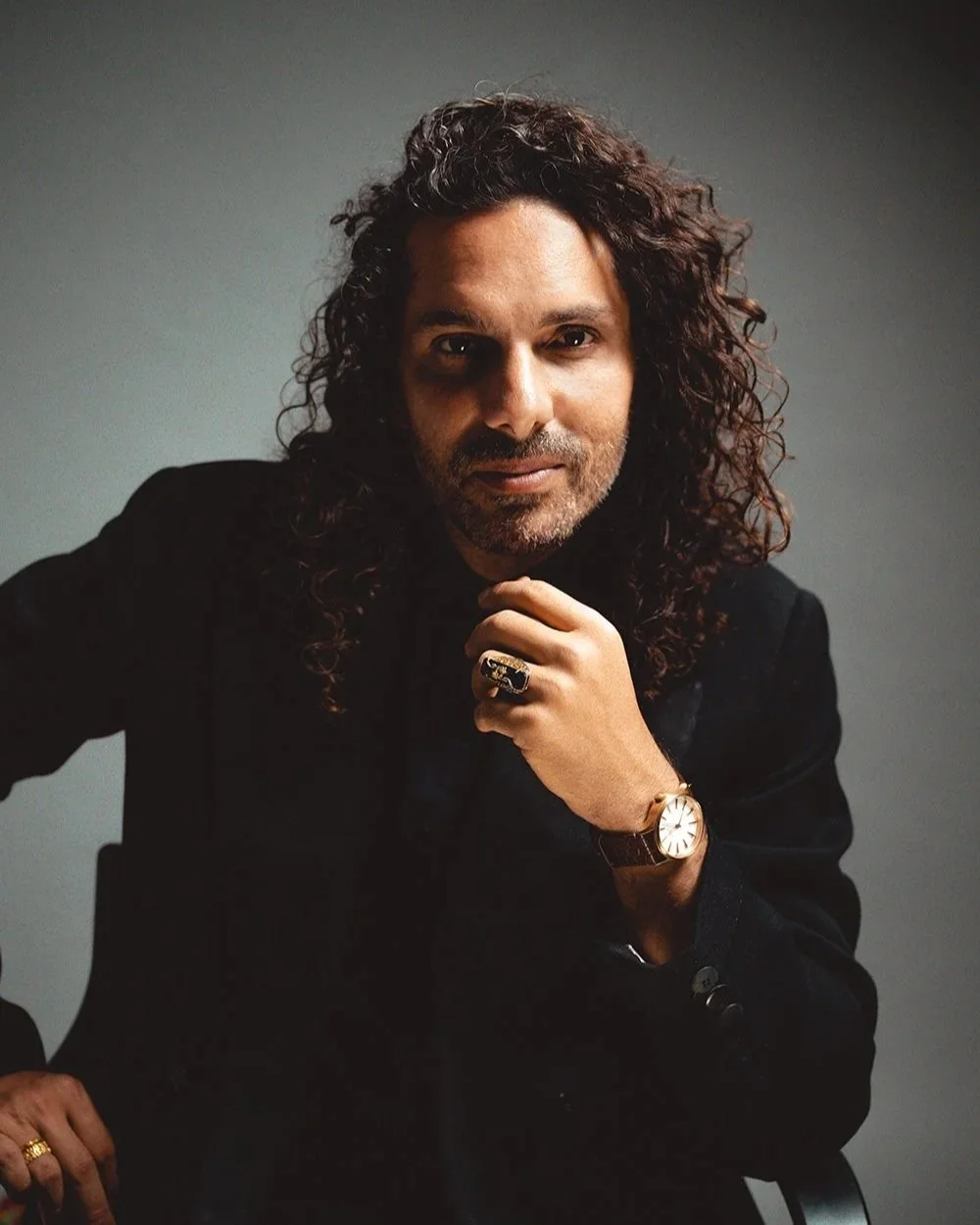
The Odyssey Within is a curriculum-aligned incursion, workshop and online resource for Years 9–12, led by award-winning poet Luka Lesson. It connects ancient epic poetry to contemporary student life — through spoken word, music, performance, history, and guided self-reflection.
The Odyssey Within gives your students a chance
to both study The Odyssey and respond to it creatively
— with guidance from a living artist who has done the same.
What students explore
Three thousand years of wisdom.
Four Modules. Your students.
01
The Cyclops — Filoxenia & Ego
How do we treat the stranger?
The sacred Greek law of hospitality as the measure of civilisation. The Cyclops is monstrous not because of his size but because he cannot see the humanity of the people in front of him. Odysseus survives by calling himself ‘Nobody’ — then undoes everything by shouting his real name back across the water. Xenophobia and ego as the same root failure.
03
The Sirens — Distraction vs. Direction
What pulls us off course?
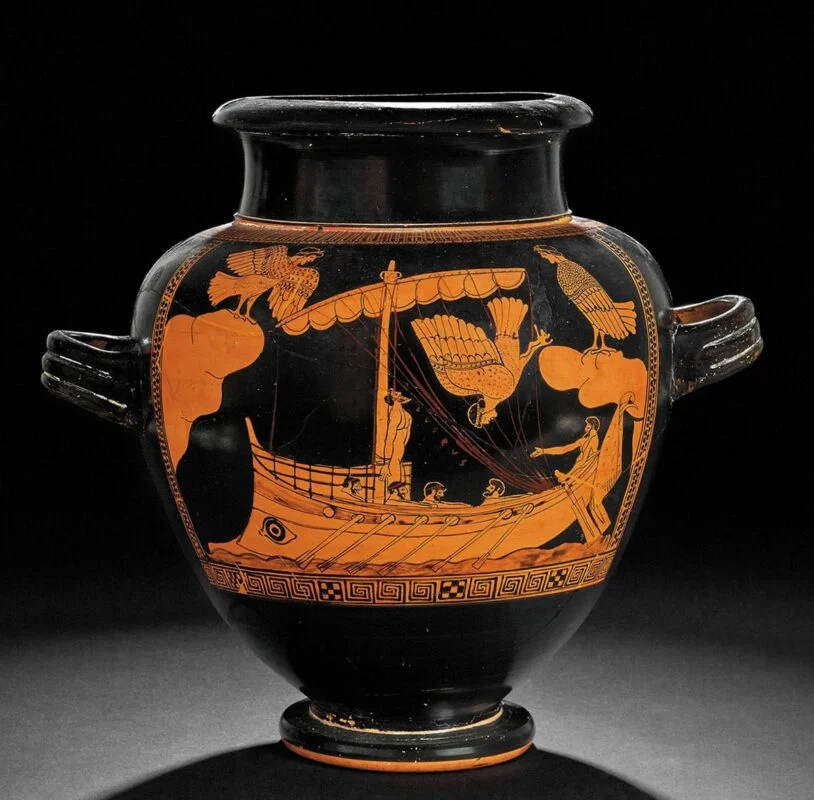
Odysseus lashes himself to the mast — not to block the song, but to hear it without being destroyed by it. To be in the world but not of it. The Sirens are not only outside forces: anyone who has done a silent retreat knows the inner noise gets louder when the outer noise stops. The goal is not to escape temptation but to face it without losing direction.
02
Achilles in the Underworld — Kleos
What are we trading our lives for?
Achilles chose a short glorious life — Kleos, eternal fame — and got it. Three thousand years later his name is still known. Odysseus expects to find him in the Underworld celebrated and in triumph. Instead, Achilles says he would rather be a living slave than king of all the dead. The ancient mirror for culture of external approval: what we trade our lives for, and whether the trade is worth it.
04
The Return to Ithaca — Finding the Self
Who do we come home as?
Odysseus returns home a beggar. How do you treat someone when you believe they have nothing? Stripped of title, reputation, and appearance, he must stand in his own house as a nobody — and fight for what he loves. What does home mean to you? Is it where you are loved even when you are a nobody? How hard (and how smart) will you fight for a chance to return home?

"Odysseus is not exceptional because he is fearless.
He is exceptional because he keeps moving despite
exhaustion, fear, and self-doubt.
That is the story every adolescent needs to hear."
Luka Lesson
How to book
Three ways to bring
The Odyssey Within into your school.
SHORT AND SHARP
One Hour Workshop
A live poetry performance and guided exploration for an entire year level or classroom. Luka performs excerpts from the Odysseus work, then leads students through focused reflection and a creative task. Suitable for Years 8–12 in English, Drama, Ancient History or Music Class. Runs to a single bell.
DEEP DIVE
Full Day Incursion
Four sessions across a school day, in any combination of the four modules on offer, and in any faculty — English, Music, Drama, Ancient History or Wellbeing. Students produce original poetry, theatrical creations or remixed music by the end of the day. Cross-faculty: works with English, Drama, Music, and Wellbeing teams simultaneously.
YEAR-ROUND
Online Resource
A self-contained digital resource for classroom use — including video, lyric study, musical insights, and guided creative writing activities. This resource includes insights from composer James Humberstone and our partners in Greece. Curriculum-mapped for Years 9–12. Available as school-wide licence.
The Odyssey Within is designed to be booked not only by English, Drama, Ancient History and Music departments but also can be deployed by Wellbeing Coordinators, Pastoral Care leaders, Chaplains, and Year Coordinators.
It functions as standalone wellbeing programming, or as a bridge between academic content and student self-understanding.
-
Odysseus's trials are read as encounters with forces that test identity and will. Students map their own challenges onto the journey, building language for difficulty and persistence.
-
Nostos — the Greek concept of homecoming — anchors the programme. Students explore what it means to know where you come from, and how belonging is constructed, lost, and recovered.
-
Students engage with the question at the heart of the epic: what are you willing to endure for what matters most? Creative writing activities allow students to articulate personal values through the hero's journey.
-
The Sirens, Circe, Scylla and Charybdis are used as frameworks for understanding temptation and self-sabotage. Students develop awareness of how their own 'monsters' may be pulling them off course.
-
Guided writing, music and drama activities give form to interior experience. Creative expression is itself a wellbeing intervention — offering language and structure for feelings that are otherwise wordless.
I could never have imagined that Luka could create a group of courageous young leaders who would stand and deliver words laden with truth, humour and desire. He graciously offered not only his talent, but his heart to young people on the verge of being lost.”
— Kylee Owens, Teacher

About Luka Lesson
Greek-heritage poet. Rap Artist. Modern Rhapsode.
Luka Lesson is the director of The Future Ancients — a creative company dedicated to drawing the ancient world as a mirror for the present. His work roots itself in the Greek tradition: epic, philosophy, myth, and the oral transmission of knowledge across generations.
His poetry is taught on Australian curricula across multiple states. He has worked with schools and young people across Australia for over a decade, bringing ancient knowledge into living contact with the present. The Odyssey Within is the latest formal expression of that work.
Australian Poetry Slam Champion
TEDx Speaker
On the Australian Curriculum
40+ School Visits / Year
20 Years Experience in Poetry Education
Musical Artist
Greek-Heritage / Authentic Cultural Connection
to The Odyssey
Supported by
Online Resource Featuring…
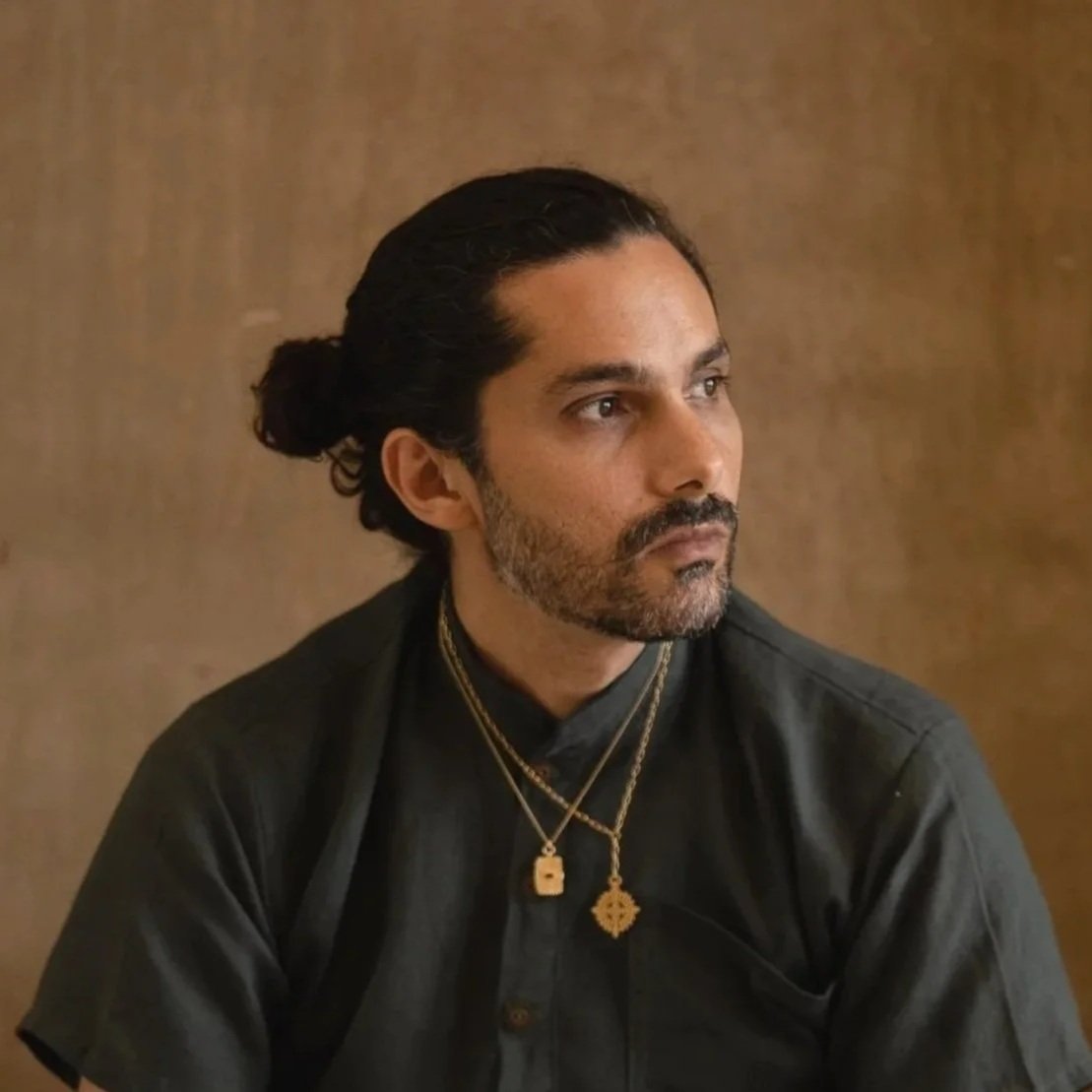
Luka Lesson is a poet, rapper and educator of Greek heritage, born in Australia. His work crosses the history of his family homeland, the powerfully political and the vulnerably self-reflective. Luka has performed with the Queensland Symphony Orchestra, published multiple collections of poetry, toured both nationally and internationally and has released multiple albums of his work. Luka’s poems appear on education curriculums across Australia and he runs poetry retreats in Greece each year - combining history, culture, community and poetry to create unforgettable creative experiences.
LUKA LESSON
Born in London, Humberstone completed a degree in composition at the University of Exeter. By combining postgraduate studies in composition and experimental music with education qualifications and an 11 year residency at Sydney's MLC School, Humberstone developed an approach to combining new and challenging music for children with supporting resources. In 2013 Humberstone completed his PhD and was appointed Lecturer in Music Education at the Sydney Conservatorium of Music. Today he works in the fields of composition, music education and technology research.
ASSOC. PROF. JAMES HUMBERSTONE
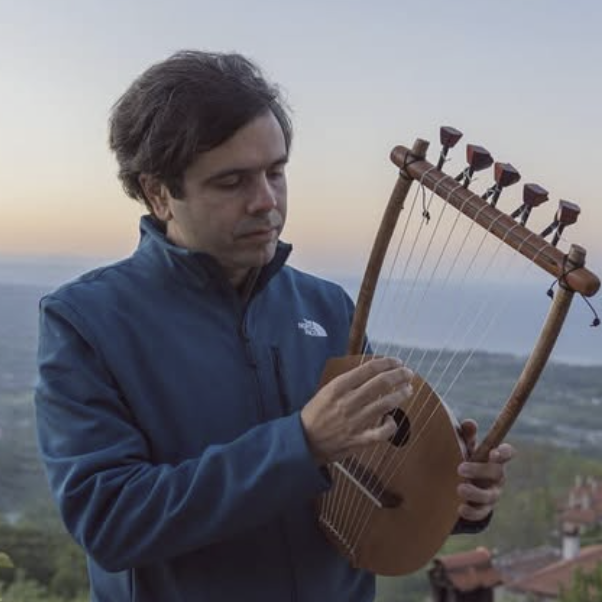
Theodore Koumartzis is a musician of the ancient lyre and the visionary behind the first interactive Museum of Ancient Music Instruments Seikilo of Thessaloniki. He is also a member of the family of luthiers and the musical brand Luthieros, responsible for the construction (together with the Aristotle University of Thessaloniki and the Hellenic University of Greece) of all these musical instruments. In this short life he has had the opportunity to collaborate with musicians such as Grammy award-winning Bulgarian pianist Milcho Leviev and Ross Daly.
THODORIS KOUMARTZIS
Antiopi Argyriou is a Classics scholar specialising in Greek epigraphy, history, and literature of the Hellenistic and Roman periods. A Postdoctoral Fellow at Harvard University’s Center for Hellenic Studies and researcher at the National and Kapodistrian University of Athens, she holds a PhD from the University of London, and is an alumna of Clare College, Cambridge. Her research explores honorific inscriptions and historiography. Her 2025 publication in Mnemosyne examined oratory and history-writing in Imperial Athens. She also brings extensive experience as a teacher of Greek language and literature in secondary education.
DR. ANTIOPI ARGYRIOU
The Odyssey Within: Inclusions
Five complete teaching modules built around The Odyssey — an Introductory Teachers Resource plus four full modules on Books IX (The Cyclops), XI (The Underworld), XII (The Sirens) and XXII (The Suitors).
Print-ready handouts for every module — between 30 and 50 pages each, designed to photocopy and hand out. Each one contains the original text in the public-domain A. T. Murray translation, Luka Lesson's spoken-word performance script, composer notes, classicist lectures, writing workshops, a theatre workshop, a wellness reflection set, and full NSW curriculum mapping.
Full NSW Stage 5 & 6 curriculum alignment across English, Ancient History, Drama and Music — every outcome code listed, every assessment task flagged, every workshop tagged.
James Humberstone's full orchestral and choral scores — the actual score for every scene, straight from the composer at Sydney Conservatorium of Music. Drop it into Music classes for analysis or performance.
Greek scholarship from Dr Antiopi Argyriou (Athens) — every module includes a lecture on the ancient Greek concepts at its heart: filoxenia, hybris, kleos, nostos, nous.
Reconstructed ancient instrument music from Thodoris Koumartzis (Seikilo Museum, Thessaloniki)
A four-subject homework split ready to assign per module — English, Music, Drama, Ancient History — no extra prep required.
A first look at Luka Lesson's Odysseus — exclusive live-performance footage from the Melbourne preview of the hip-hop and spoken-word retelling of the Odyssey with full orchestra and choir.